THIS BLOGGER HAS MOVED!

THIS BLOGGER HAS MOVED!
I am now writing exclusively over at the Christians In Context blog. Click on this banner to be taken there!

Redeemer Church

Redeemer Church
Looking for a church in the Omaha area? Come check out ours on Sunday mornings at 11!
Showing posts with label Books. Show all posts

Wednesday, March 23, 2011

Love Wins for all the fallen?

Forgive me. I couldn't resist writing this in my best Bell-style prose.

In this whole whirlwind that Rob Bell has stirred up, there is one group that has been conspicuously absent from the wide net of universalism that he and others have cast out.

One group that has been neglected.
Ignored.
And they cry out for their just defense.

I speak of course about Satan and the demons.

After all, if God is a God of love, and if he loves all of his creation, and if he wants to see it all brought into shalom, and if God will indeed reconcile all things unto himself, and if no temporary rebellion is worthy of eternal punishment—well then why not? But let me put it in Bell's own words:

At the heart of this perspective is the belief that, given enough time, everybody will turn to God and find themselves in the joy and peace of God's presence. The love of God will melt every hard heart, and even the most "depraved sinners" will eventually give up their resistance and turn to God.

And so, beginning with the early church, there is a long tradition of Christians who believe that God will ultimately restore everything and everybody, because Jesus says in Matthew 19 that there will be a "renewal of all things," Peter says in Acts 3 that Jesus will "restore everything," and Paul says in Colossians 1 that through Christ "God was pleased to . . . reconcile to himself all things, whether things on earth or things in heaven" (Bell, 107).

We're told more (and more often) about the final state of rebellious human beings than we are about the final state of the demons. Especially by Jesus. So if God's love overcomes all that has been revealed about judgment toward fallen humanity, certainly it can do the same for the demons.

But if.

If one accepts the reality of wicked, fallen spiritual beings whose rebellion is as continuous and ongoing into eternity as their existence . . .

If one accepts the reality of a just judgment and eternal confinement and punishment of such beings . . .

. . . well then demons aren't the only ones who fit that description and deserve that end. It would seem to me that demons—more so than "those who have never heard"—have the better argument for the unfairness of the Gospel (since it in no way, shape, or form is available to any of them). Yet I don't hear anyone fighting that theological battle.

So can we expect Love Wins II: Stryper Was Wrong* any time soon?

Of course not. Because even though it's logically consistent with Bell's reasoning as to why all humans will be saved, that's just not good PR for the universalist camp. Or perhaps Rob doesn't actually believe that God's love wins out over all resistance and redeems all hard hearts.

Rob, for a universalist, that's not very inclusive of you.

*Sorry, that was probably a very obscure reference for many of you. Stryper had a hit album called To Hell With the Devil.

Monday, February 21, 2011

Tim Keller deal alert (one week only)!

For one week only, Westminster Bookstore is offering Tim Keller's new book King's Cross for almost nothing: $10.38 or 60% off your first copy (happens automatically when added to cart). All additional copies 45% off. Sale ends February 28th.

Tim Keller’s description of King's Cross:
“The whole story of the world—and of how we fit into it—is most clearly understood through a careful, direct look at the story of Jesus. My purpose here is to try to show, through his words and actions, how beautifully his life makes sense of ours.”

“[The Gospel of] Mark does not read like a dry history. It is written in the present tense, often using words like ‘immediately’ to pack the account full of action. You can’t help but notice the abruptness and breathless speed of the narrative. This Gospel conveys, then, something important about Jesus. He is not merely a historical figure, but a living reality, a person who addresses us today. In his very first sentences Mark tells us that God has broken into history. His style communicates a sense of crisis, that the status quo has been ruptured… Jesus has come; anything can happen now. Mark wants us to see that the coming of Jesus calls for decisive action… Therefore we need to respond actively. We can’t remain neutral. We may not sit and reflect and find excuses for not changing our lives now.”
Click to read a couple sample chapters on Jarius' Daughter and the Syrophoenician Woman or go straight to the Westminster Bookstore.

Friday, October 1, 2010

Exclusive Q&A with the authors of Is God Just a Human Invention?

If you are interested in McDowell and Morrow's book Is God Just a Human Invention?, head over to the other blog I am a contributor to, Christians In Context, for an exclusive Q&A with the authors!

Thursday, January 14, 2010

2010 Book List

Well, it's that time again. New Year's resolutions and such. Pastor Lee and I have a yearly routine as Redeemer Church staff of forming a "One-Year Growth Plan" for ourselves. This year, as last year, part of my goal is to read one book a week (52 for the year). I figured since I have to keep track of them anyway, I'd post them here in case anyone wants to make any suggestions to my reading or ask about any of the books on the list.

Also, as I did last year, I will continually update the list but I won't move it to the top of the blog, so if you're interested, you'll have to search it out! The list will be in ascending order of my favorites!
  1. Is God Just a Human Invention? - McDowell and Morrow
  2. Your Jesus Is Too Safe - Jared Wilson
  3. Word Pictures - Brian Godawa
  4. Scandalous - D.A. Carson
  5. The Glorious Pursuit - Gary Thomas
  6. Marks of the Messenger - J. Mack Stiles
  7. A Praying Life - Paul Miller
  8. Pure Pleasure - Gary Thomas
  9. Dug Down Deep - Joshua Harris
  10. Church Planter - Darrin Patrick
  11. Intelligent Design Uncensored - Dembski and Witt
  12. Can We Trust the Gospels? - Mark D. Roberts
  13. CrossTalk - Michael R. Emlet
  14. On Guard - William Lane Craig
  15. Evidence For God - William Dembski (ed.)
  16. Radical - David Platt
  17. The Gospel-Driven Life - Michael Horton
  18. Sticky Teams - Larry Osborne
  19. Christless Christianity - Michael Horton
  20. Embodying Our Faith - Tim Morey
  21. Holy Subversion - Trevin Wax
  22. Wired For Intimacy - William M. Struthers
  23. Counterfeit Gods - Timothy Keller
  24. The Trellis and the Vine - Marshall and Payne
  25. A Place For Truth - Dallas Willard (ed.)
  26. Unceasing Worship - Harold M. Best
  27. The Five Points of Calvinism - Edwin H. Palmer
  28. Jesus Manifesto - Leonard Sweet and Frank Viola
  29. Why Is God Ignoring Me? - Gary Habermas
  30. Simple Church - Thom S. Rainer
  31. A Million Miles In a Thousand Years - Donald Miller
  32. Vintage Church - Mark Driscoll
  33. Biblical Eldership - Alexander Strauch
  34. A Sweet and Bitter Providence - John Piper
  35. The Good News We Almost Forgot - Kevin DeYoung
  36. Christ Among the Dragons - James Emery White
  37. Against All Gods - Philip E. Johnson and John Mark Reynolds
  38. When a Nation Forgets God - Erwin Lutzer
  39. AND: The Scattered and Gathered Church - Halter and Smay
  40. The Vertical Self - Mark Sayers
  41. A Long Obedience In the Same Direction - Eugene Peterson
  42. Losing Our Virtue - David F. Wells
  43. The Radical Disciple - John Stott
  44. The Discipline of Grace - Jerry Bridges
  45. Your Church Is Too Small - John H. Armstrong
  46. Evil and the Justice of God - N.T. Wright
  47. The Passionate Intellect - Alister McGrath
  48. The Reason For Sports - Ted Kluck
  49. Hedges - Jerry B. Jenkins
  50. Throw It Down - Judd Wilhite
  51. The God You Can't Ignore - John MacArthur
  52. Living the Resurrection - Eugene H. Peterson
  53. The Good and Beautiful God - James Bryan Smith
  54. Church Shift - Sunday Adelaja
  55. Anatomy of the Soul - Curt Thompson, M.D.
  56. Flickering Pixels - Shane Hipps
  57. The Gospel According to Lost - Chris Seay

Thursday, December 24, 2009

Top 10 Books I Read In 2009

I know this is quite cliche', but it's the Christmas season and all of us slip into the cliche' at some point during December. So I'm going to use my pass on this one: the top ten books I read this year. You may notice that not all the books that make the list were published this year. This is because this is the first year I've been on a serious reading regimine, thus I had some catching up to do in books from past years as well.

Before we begin, I am greatly obliged to those publishers and bookstores who have made much of my reading possible this year through providing free materials for review. Notably, I must thank InterVarsity Press, NavPress Publishing Group, Thomas Nelson Publishers, Tyndale Publishing and the Westminster Bookstore.

10. Finally Alive - John Piper
A beautiful and much needed book for Christianity, John Piper deals thoroughly with the rebirth, regeneration, and new life of the Christian. It is exhaustive without being exhausting or intimidating (as Desiring God and some of his other works can be at times). A great place to start to understand the Reformed position on God's role in our salvation.

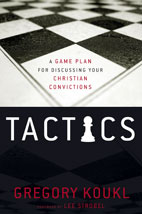
9. Tactics - Greg Koukl
This may be the least well-known book on this list, but Greg Koukl (host of the weekly Stand To Reason radio program) has written the perfect handbook on apologetics. He is not answering specific challenges leveled at Christian apologists, rather his book addresses techniques (or tactics) for making a defense for the Christian faith in a way that is honest, charitable and winsome. This book is uniquely helpful.

8. Why We're Not Emergent (By Two Guys Who Should Be) - Kevin DeYoung and Ted Kluck
If there were two cultural movements that generated the most Christian books this year, I am guessing it would be the New Atheism (from without) and the Emergent church (from within . . . Sorta. Maybe. Even they would probably equivocate here). Why We're Not Emergent is a good introduction to the debate though it's obvious which camp they are coming from.

7. Hollywood Worldviews - Brian Godawa
As a Christian in the movie industry, Brian Godawa is uniquely positioned to write this book. Even for those of you who don't spend much time talking or thinking about worldviews, this book has much to benefit from. In particular the first and last chapters lay out some excellent guidelines and principles for watching and engaging with Hollywood and it's culture. This book was well written, even better thought-out, and I endorse it to anyone who likes movies. I'm assuming that's all of you.

6. Total Church - Tim Chester and Steve Timmis
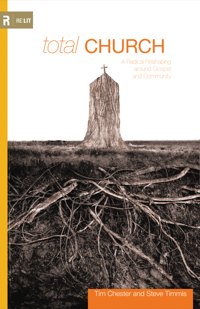
This book will not be for everyone, but for those in church ministry this is a must-read. While not a revolutionary book on how to "do church", it gives a wonderful picture of how a healthy church "does life together". (Shoot me for using those phrases) Do you believe church is simply meeting once a week? You must read this book. Do you believe it is something much more? You will love this book.

5. Hidden Worldviews - Steve Wilkens and Mark L. Sanford
In Hidden Worldviews, Authors Steve and Mark deal with what they call "lived worldviews". These lived worldviews include such ideas as individualism, consumerism, nationalism, moral relativism and salvation by therapy. Every chapter details both the truth or good as well as potential problems of each worldview before drawing a conclusion. In this manner, the authors present a very even-handed treatment of each idea without sounding alarmist or too "Chicken Little". A very refreshing read and quite unique in it's approach and subject matter.

4. The Reason For God - Timothy Keller
Dealing with some of the biggest and most common objections to Christianity, Tim Keller has written one of the best apologetic books for Christianity that I have ever read. So good, in fact, that I have not been able to keep it in my possession since reading it because I've been perpetually loaning it out.

3. Blue Like Jazz - Donald Miller
Yes, as I warned, this book is the best example of how behind I am on my reading. I'm sure this was on everyone else's list five years ago but better late than never I suppose. And I certainly see what all the hype was about. Don talks about his own spiritual journey in a very existential manner, but there is enough orthodoxy in here to keep even a doctrinal stickler as myself mollified.

2. When Helping Hurts - Steve Corbett and Brian Fikkert
Steve and Brian have written the best book I have ever read for the Christian and poverty relief. This book is full of insights from two guys that have seen it work on the ground level. Insights like: how poverty of all sorts is linked to man's fallenness, the different stages of poverty and the different ways they need to be addressed, and how we perpetuate instead of alleviate poverty by just throwing money at it. This book is greatly needed and will become more important in the coming years as celebrity poverty aid and social justice gospels grow in popularity.

1. Notes from the Tilt-A-Whirl - N.D. Wilson
I am well aware that my number one book is probably not on anyone else's list or even on their radar. And it is their loss. While not everyone liked this book as much as I did (Pastor Lee), no other book this year made me goose-bumpy or made me laugh and cry at the same time. His writing evokes emotion like the best fiction, scratches the brain like the best philosophy, and stirs a love for Creator and creation like the best theology. His thoughts come out jumbled and scatter-shot, but in the end he paints a beautiful word picture.

Tuesday, December 8, 2009

Why Twilight Is So Bleeding Popular (Yes, pun intended)

Though I have not seen any of the Twilight movies yet, I found this article by John Granger to be completely fascinating and on point about popular entertainment.

Touchstone Archives: Mormon Vampires in the Garden of Eden:
"I suggest that the Twilight series is something for thoughtful people to be aware of and to think seriously about, first, because of its remarkable hold on the imagination of American readers and movie-goers, but second, and more important, because of the reason these books are so popular: They meet a spiritual need. Mircea Eliade, in his book The Sacred and the Profane, suggests that popular entertainment, especially imaginative literature and film, serves a religious or mythic function in a secular culture. When God is driven to the periphery of the public square, the human spiritual capacity longs for exercise, and it often finds it in the 'suspension of disbelief' and activity of the imagination that are available in novels and movies.

The books and films that satisfy this spiritual longing most profoundly are the ones that have religious content of some kind, sometimes any kind. Not just The Lord of the Rings and The Chronicles of Narnia but also Harry Potter and The Matrix contain symbolism and religious notes that resonate with readers and moviegoers.

People are drawn to, and many are consumed by, those books and movies that most engagingly and convincingly deliver or smuggle in this religious content and mythic meaning. Not surprisingly, though, this meaning cannot tear down or even challenge the golden calves of our modern moral landscape."

Tuesday, September 29, 2009

Book Review: Hollywood Worldviews by Brian Godawa

I love movies. They are part of the language of our culture and generation. I believe that many in my generation absorb their beliefs and worldview from the movies they watch without even knowing it. I also believe that our entertainment in general (but movies specifically) shape our values as a culture as much as it reflects our values as a culture.

This is why, if I were so gifted, I would be making movies today. Movies that put the themes of the Gospel, of fall and redemption, of substitutionary atonement, on the silver screen in a way that makes it real and palatable to the average viewer. And this is why I loved Hollywood Worldviews by Brian Godawa so much.

Godawa is a Christian in the industry, making (and thinking about) movies with just such a motivation in mind. Without endorsing all movies wholesale, Godawa makes an argument for the value of movies to instruct, inform, and simply reflect the God-given creativity in the creature and the beauty of creation around us. Speaking of finding the value in movies, Godawa says, "Because all truth is ultimately God's truth, we can find what we think is true in a movie and dissect what we think is false".

Godawa goes straight to the hot-button topic for the Christian concerning movies, addressing "Sex, Violence and Profanity" in Chapter 1. His key point about such issues is that "context makes all the difference between moral exhortation and immoral exploitation of sin". In following chapters he begins to address the Hollywood worldviews such as existentialism, postmodernism, and other worldviews. These chapters were some of the most personally enjoyable, as I saw many movies I've watched in a completely different light.

Even for those of you who don't spend much time talking or thinking about worldviews, this book has much to benefit from. In particular the first and last chapters lay out some excellent guidelines and principles for watching and engaging with Hollywood and it's culture. This book was well written, even better thought-out, and I endorse it to anyone who likes movies. I'm assuming that's all of you.

Tuesday, September 22, 2009

Win a FREE NLT Mosaic Bible!!!

Exciting day! For the first time on this blog, I get to give away something! Today is the release date of the New Living Translation Bible: Mosaic Edition. You can preview or buy your own copy over at Amazon.com.

Stay tuned for a review of Mosaic in the very near future, as well as a guest post from one of the contributors!

And now for the giveaway instructions: simply post a comment (or e-mail it to me, I must be able to contact you if you win) on why you think you should win the copy of Mosaic.

Also, double your chances of winning and head over to the Christians in Context blog where I am a contributor as well and make a submission on that blog's giveaway in the next couple of days.

Tuesday, July 21, 2009

Vacuum Salesmen and Hell: A Parable

Last summer my wife and I went to the Nebraska State Fair so I could eat my first deep-fried Twinkie. It was worth the price of admission, price of Twinkie, and all future heart problems. While we were there we made our way to the exhibitors hall, where all the cool gadgets are peddled. These are the sorts of products that are cool enough that people will buy them at first glance, but not reliable enough that Wal-Mart or Target would stand behind them. I believe the strategy is make a good sell then flee town before your product falls apart.

While we were there, we were drawn in by an air purifier/humidifier that was free if we agreed to let a vacuum salesman come to our house and give us a 45 minute demonstration of his product. So after he came and gave us his 90 minute demonstration, I was still unconvinced. He tried every angle: need ("look at all these germs and allergens your breathing and living in"), benefit ("this will save you money in the long run over carpet and upholstery cleanings, allergy medicines, etc."), and guilt ("I've got a family, I'm just trying to provide for them. Don't waste my time"). He almost parted me with $4,000 when he showed my wife a thin, black cloth with a pile of what he vacuumed out of our couch. He should have been ashamed for playing on the fears of an already-neurotic, pregnant woman.

I was reminded of our vacuum salesman incident (as we now call it) today while reading Why We're Not Emergent (By Two Guys Who Should Be) by Kevin DeYoung and Ted Kluck. Don't worry, this is not a post on the emergent church. However, this did jog my memory: "On the emergent end I think people are afraid that Christians are using hell as a sales tool to get people to buy into Christianity, and I think that should be avoided". It got me thinking of the salesman. While I agreed with his premise that we needed to be free of all the dust mites, dead skin cells, allergens, and germs in our life, I just couldn't get over the cost. When he asked for references of others he could pitch to, I certainly did not want to be the one responsible for afflicting anyone else with what I just went through. Not only that, but his approach colored my opinion of other salesmen.

Hell is a reality just like dust mites, dead skin cells, allergens, and germs (my wife would probably suggest they are synonymous). Certainly not equal in magnitude and severity, but roll with my analogy. Even if people agree with our premise that hell exists and should be avoided, many of them just can't get over the cost. When this happens, our approach and conduct up to this point will determine largely how they think of Christianity afterwards. Will they feel that we had a genuine concern for them or that we just wanted to "seal the deal"? Will they want to spend more time around Christians or less? Will they come and seek you out when their life gets too messy dirty or will they go to someone else?

I am not suggesting that our Gospel presentation should just be "hell avoidance". Indeed, the Gospel, in its essentials, need not include hell at all. But when we do talk about hell, how is it handled? Are we presenting the Gospel like our vacuum salesman, just using the idea of hell to scare, coerce and intimidate? Are people being scared away from Christianity for fear that they will have to adopt similar tactics in being Gospel salesmen if they buy in? Is my impersonal and calloused approach coloring their opinion of not only me but other Christians and even Christ? The Gospel is offensive enough without us adding offense to it.

Thursday, July 2, 2009

In defense of religion?!!

It is refreshing to hear a couple well-spoken guys defending religion in the public arena. I have personally voiced my opinion on the pariah that the word "religion" has become. Now Kevin DeYoung and Ted Kluck are doing the same, not only through Christian publishers (see Why We Love the Church), but through the mainstream media as well.

From the Washington Post: "Here's what Bono, Oprah, and the guru speakers on PBS won't tell you: Jesus believed in organized religion and he founded an institution. Of course, Jesus had no patience for religious hacks and self-righteous wannabes, but he was still Jewish. And as Jew, he read the Holy Book, worshiped in the synagogue, and kept Torah. He did not start a movement of latte-drinking disciples who excelled in spiritual conversations. He founded the church (Matt. 16:18) and commissioned the apostles to proclaim the good news that Israel's Messiah had come and the sins of the world could be forgiven through his death on the cross (Matt. 28:18-20; Acts 2:14-36)."

Tuesday, June 30, 2009

True, Balanced Doctrine and Orthopraxy

I am currently reading The Irresistible Revolution by Shane Claiborne. It has been a fascinating and compelling read so far, but he has said something twice that has stood out to me both times (I think he wanted to make sure I caught it) and I have taken exception with it. It seems to be a sentiment that is shared with many in the emerging and postmodern Christian circles.

He said "Political ideologies and religious doctrines just aren't very compelling, even if they're true" and again, "Doctrine is not very attractive, even if it's true".

I think I can understand his motivation for saying this and, if it had been only once, I may have been inclined to ignore it. But when it bears repeating, it bears addressing. Certainly his intention was to say that what is compelling and attractive is missional, communal, Jesus-like, (fill in your own Christian buzzword here _________) living that reaches out to the lost, marginalized, and hopeless.

The problem is you can't divorce that sort of living from the doctrine behind it. Some people, swinging like a pendulum away from fundamentalism, will abandon the language surrounding their faith. However, as they continue to live the way Jesus lived and wants them to live, they are still affirming and acting on true, balanced doctrine.

Jesus died for my sins. Doctrine. He saved me from hell, both here on earth and in eternity. Doctrine. He asks me to share His love and Gospel. Doctrine. When I serve the marginalized, I serve Jesus. Doctrine.

I am not defending all doctrine. There is doctrine that is false, and it is patently dangerous and destructive. There is also true doctrine that, if out of proportion and unbalanced by other true doctrine, can be equally dangerous and destructive. But true, balanced orthodoxy is behind all right living.

Though you can have orthodoxy (right belief) without orthopraxy (right living), you cannot have orthopraxy without orthodoxy. While we can run away from the words, true doctrine will be at the core of all faithful Christian living. This is because all true doctrine is rooted in the character of God and his revelation. Whether from the Bible or the motivation of the Holy Spirit in a believer's life, true and balanced doctrine lies in the bones and sinew of a Christian life rightly lived. Or, stated another way, when your life aligns with the character of God in any area, your life aligns with true, balanced doctrine.

And that is compelling and attractive.

Thursday, March 19, 2009

Jesus is the Way, the Gate, and the Shepherd

Jesus is pretty popular today. I mean, if you were to ask a dozen people how they felt about Jesus, I doubt one of them would have a bad thing to say (to your face, at least). The thing about this popularity is, I don't think it's the real Jesus that's the popular one. I think there's a new postmodern pseudo-Jesus, a quasi-Jesus who's just a good teacher and proponent of ideals that the postmodernist strives for.

Decidedly less popular today is the idea that salvation is exclusive, that it is solely through Christ that we can come to God. This seems to be the climate that Rob Bell is reacting to in Velvet Elvis:


As a Christian, I am simply trying to orient myself around living a particular kind of way, the kind of way that Jesus taught is possible. And I think that the way of Jesus is the best possible way to live . . . Jesus at one point claimed to be "the way, the truth, and the life". Jesus was not making claims about one religion being better than all other religions. That completely misses the point, the depth, and the truth. Rather, he was telling those who were following him that his way is the way to the depth of reality.
Ah, how diplomatic. Just a little equivocal. Fortunately—or unfortunately, depending on how you feel about Jesus—he was not this ambiguous. In fact, Jesus concluded his proclamation of being the Way/Truth/Life by saying "no one comes to the Father but through me". It's strange that Jesus says the way is through him, rather than with him, or following behind him. It's almost as if Jesus considered himself as more than just a life-model, more than just an ideal to be pursued.

And because Jesus was so unambiguous, he was clear about what he did consider himself to be. The very same author who recorded Jesus saying he was "the way" also recorded another proclamation Jesus made about himself. In John 10, Jesus says he is the shepherd, and "he goes on ahead of them, and his sheep follow him because they know his voice". Now this certainly sounds more like it! A Jesus we can listen to and follow. This sounds like the life-model/ideal that we're all comfortable with.

Unfortunately, his hearers "did not understand what he was telling them", so he had to expound what he meant—and ruined our paradigm in the process. Jesus said, "I am the gate; whoever enters through me will be saved". There's that word again: through. So Jesus is not simply the model for a Christian life, he is the means into a Christian life. And how is this done? Jesus said, "I am the good shepherd. The good shepherd lays down his life for the sheep". And in plain language in the following chapter Jesus said, "I am the resurrection and the life. He who believes in me will live, even though he dies".

So Jesus is the way to be walked, the gate to be passed through, and the shepherd who guards the way and opens the gate. If you're anything like me, this seems really small-minded, really narrow. Which should be a clue that we're on to something: "small is the gate and narrow the road that leads to life, and only a few find it".

Thursday, March 12, 2009

Judge not . . .

"Judge not, that you be not judged. For with the judgment you pronounce you will be judged, and with the measure you use it will be measured to you. Why do you see the speck that is in your brother's eye, but do not notice the log that is in your own eye? Or how can you say to your brother, 'Let me take the speck out of your eye' when there is a log in your own eye? You hypocrite, first take the log out of your own eye, and then you will see clearly to take the speck out of your brother's eye." Matthew 7:1-5

Matthew 7:1 is perhaps one of the best known and oft used (and misused) Bible verses to end a conversation about spiritual things and objective truth (by both Christian and non-Christian alike). It's particularly popular in situations where morality is the topic. However, one of my favorite podcasters, Gregory Koukl, deals with this passage at length in his latest book, Tactics.


A closer look at the facts of the context shows that Jesus did not condemn all judgements, only hypocritical ones—arrogant condemnations characterized by disdain and condescension . . . In fact, even in this passage Jesus actually encourages a different sort of judgment once the hypocrisy has been dealt with . . . There are two other kinds of judging that are commanded in Scripture. Judgments that are judicial in nature are good when done by the proper authorities. Judges judge. They pass sentence. That's their job. Church discipline is of this sort . . . Judgments that are assessments—appraisals of right or wrong, wise or foolish, accurate or inaccurate, rational or irrational—are also commanded . . . A judicial action, a factual assessment, a hypocritical arrogance—all are judgments. Only the third is disqualified by Jesus. The first two are actually virtues in their proper settings and therefore commanded by Scripture.

This very topic came up recently in my community group, and on our drive home my wife and I discussed how a Christian should handle such situations surrounding morality. The following is my formula that grew out of that conversation. Note: I am using the word "judgment", but just as Greg did, you could substitute "assessment" or "appraisal" if the j-word makes you uncomfortable. And please reserve your protests and push-back until you read the last step.

Make a judgment on the sin. Is this a blatant sin according to the Bible? Or is this a gray area that you may be wrongly imposing on others? Was it a public sin? Who was affected by it? Who was involved in it?

Make a judgment on the person. Is this person a Christian? This is perhaps the most important question we can ask before we respond in any situation. 1 Corinthians tells us we are not called to judge the world. Are they old enough to understand what they're doing? Are they a member of a church?

Make a judgment on the situation. What is your relationship to this person? Spouse? Parent? Friend? Co-worker? Stranger? Your response must be different given your relationship. Are they a member of your church? If not, what is the climate of their spiritual community (church or other)?

Respond in love. I considered making this final step "Love them." but I think too many people are already inclined to not do anything. I believe love requires action (and more often than not, words) when sin is involved. Most people understand this when it comes to our children; we instruct and correct. However, I believe love would dictate doing or saying something in most relationships when confronted with a damaging sin (and really, is there any other kind?). Granted we do not have the same authority that we do in a parent-child relationship, but if your relationship is close enough, you have "earned" some authority to speak love and correction into their lives.
I know there are other questions I did not think of that may be applicable, and I know some of you may have some push-back. So I would love some responses to this, and this will be a working post.

Monday, March 2, 2009

Is Christianity relevant?

The relevance of Christianity and the gospel has been a dominant theme in my thinking lately. So when several quotes in my reading and podcasting (or should that be podcast-listening?) addressed the issue, I couldn't put them down. I think it all started while reading Blue Like Jazz by Donald Miller, but since I can't quote the whole book here, I'll just endorse the book as a case study in the relevance of Christianity.

However, there were some quotes I did want to (and have the room to) share with you:

"Entertainment has destroyed our ability to think and prioritize. We lack discernment. We care about irrelevant things and ignore what is actually important. Unfortunately, the Christian community often responds by heaping 'Christian' noise on the rest of the noise. Attempting to be 'relevant' to students, we instead contribute to their appetites for distraction. Entertainment has made us silly and Christian entertainment has made our students silly Christians."
- John Stonestreet, Summit Ministries

"Under pretexts such as 'contextualization,' 'missional living,' and 'relevance,' an unbridled willingness to accommodate Divine truth to human preferences is now going on virtually unchecked in the modern and postmodern evangelical movement. Multitudes of Christians today think it is their prerogative to mold and shape everything—worship, music, and even the Word of God itself—to the tastes and fashions of the world."
- Phil Johnson, blogger with Pyromaniacs

"You are at your most relevant when you are at your most loving."
- Paul Matthies, guest preacher at The Village Church

I can spend so much time trying to watch the right movies, read the right books, and learn up on all the right topics that I neglect the "greater things". It's not that I'm avoiding working on becoming a more loving person. But if I am investing more time and effort to bolster my relevance than I am to build of my love for others, I will constantly be falling flat on my face.

Now, in reflection, my motives were good enough. I wanted to show the beauty, hope, and relevance of the gospel of grace and salvation in Jesus Christ. But if I only feel relevant while talking movies, books, and ideas that everyone else is talking about, I am deeply missing something. If I think that being able to talk about Lost, The Shield, American Idol, The Shack, The Curious Case of Benjamin Button, and all the other stuff gives me an edge over simply being loving (and growing out of that: gracious, winsome, humble, teachable, honest), then I have bought into a sad lie. If I understand all mysteries and all knowledge but have no love, I am nothing.

Monday, February 16, 2009

Who dies with toys anyway?

Have you noticed how popular our cars have become as a medium for our beliefs and arguments? For Christians, you can buy a fish. For evolutionists, a fish with legs. For Christians fighting back, a TRUTH fish eating the fish with legs. And, in return, a Darwin fish with legs eating the Jesus fish. There's pro-gun and anti-gun. There's pro-choice and pro-life. If you've got anything you feel strongly about, it can probably be boiled down to one terse sentence and stuck on your car.

One of the "bumper debates" I've seen taking place on our highways revolves around materialism. One bumper sticker reads "He who dies with the most toys . . . wins." And in reply, "He who dies with the most toys . . . still dies."

I remember growing up learning about the pharaohs of Egypt and their practice of being entombed with their chariots, jewelry, furniture, and everyday necessities. I was also horrified to learn that a pharaoh's servants, concubines, and even pets would often be killed and buried along with him. As I recall this now, I can think of no better picture of the dies-with-toys-wins mentality. And yet, I think I live in a nation of people who would amass, hoard, and kill to be buried with such things if only they had the clout, power, and god-status of a pharaoh. The only thing sadder than dying with your stuff is dying (and killing) for your stuff while you're still alive.

Which brings us to the latest book I am reading, Worldliness: Resisting the Seduction of a Fallen World. And as contributor Dave Harvey asserts, "Austerity and indulgence won't cure the bankruptcy of soul and emptiness of life that commonly result when our covetous desires are allowed free reign . . . Jesus was quite serious in saying, 'How difficult it is for those who have wealth to enter the kingdom of God!' (Luke 18:24). But this doesn't mean God is biased against the rich; it means the rich are often biased against God. Their affluence feels like it meets needs, but it really diverts attention from the Savior to their stuff."

Unfortunately, most Americans (even the Christian ones) have fallen in to the trap of materialism. We neglect those in need, those in third world countries and those next door, for the sake of a nicer car, newer house, or an impressive DVD collection (yes, that one's me). In this way, we are dying and killing for stuff. We choke our hearts with the fat of possessions, rather than the lean love of Christ. Of course, I am not advocating selling every possession and living on the street. But when we love what we amass more than Christ, we are becoming like the pharaohs of Egypt. Who will suffer and die just so you can have more things in your tomb?

Sunday, October 19, 2008

Must it be Evolution vs. Christianity?

When talking with others about our faith, one need not assume that every person that believes in evolution has a foundation of naturalism (the believe that the material world is all there is, no spirit or supernatural) beneath such a belief. There are those, like author Francis S. Collins, who believe in theistic evolution, a belief that God oversaw the process of evolution to accomplish His ends.

It is important to note that though theistic evolutionists believe in God, they have not necessarily placed their faith in Jesus Christ. While I personally find biblical Christian and evolution logically incompatible without doing some interpretive gymnastics with the first couple chapters of Genesis, I don't believe theistic evolution disqualifies a person from a genuine saving faith. However, I am not here to attack or defend that belief, but I do have a thought on evolution in general:

We should be careful that we don't make too big a deal out of evolution and burn our bridges at an opportunity to share the Gospel. For the theistic evolutionist, his belief in evolution usually will not be a barrier keeping them from considering Jesus Christ. (Though some consider God and evolution incompatible, the theistic evolutionist by definition does not, and therefore it is not a hurdle for them to at least consider Christ.) And for the naturalistic evolutionist, you must deal with the much bigger barrier of naturalism before they will consider Jesus Christ. Either way, it seems to me that evolution is a secondary issue when given the opportunity to share your faith.

Tuesday, September 9, 2008

God as Father, and we His children

How often have you heard someone say "Were all God's children"? It is not unusual for the term Father to be used when speaking of God, at least in Christian circles. Jesus did so, and instructed his followers to do the same when teaching them to pray. However, this not only speaks of God's paternal characteristics towards us, but it also speaks of our relationship to Him. It is this relationship, of us to God as children, that I want to consider.

First, it cannot be said that just anyone is a child of God. Though He did create us all, there has been a fall and separation that must be atoned for and taken out of the way. As Paul said, "For you are all sons of God through faith in Christ Jesus. For all of you who were baptized into Christ have clothed yourselves with Christ". So it is clear that the qualification for status as a child is faith and baptism in Christ. Again, as John wrote, "To all who received Him, to those who believed in His name, He gave the right to become children of God".

Don't let the blessing and priveledge of this be lost on you. This is not something that we are born into like our natural sonship, it is adoptive. Thus we are chosen and it is soley by a gift of grace. We are heirs along with Christ. We are brothers and sisters of Jesus.

What does it mean to me that God is my Father? This is a quite comfortable and comforting question. All the answers that you may come up with probably make you feel cozy and require nothing from you. However, there is a question that follows that is less comfy: What does it mean to me that I am God's child? If I may put it another way: we are quick to elaborate on what the Father-son relationship means to us in terms of benefits, but slow to consider what it means in terms of responsibilities and expectations.

You see, Christianity isn't just a "one and done" deal. It's not just fire insurance. Being a child of God signifies that He is in a position of authority over us. It suggests a sense of affection and fellowship between us. And it means giving honor to Him in all these areas. When Jesus called his followers to live in a certain way it was always to either imitate, glorify, or please the Father.
While works do not save us, they are and must be a developing "family trait". As children of God, we do no follow the law to sustain our salvation, but as J.I. Packer wrote, "Law-keeping is the family likeness of God's children; Jesus fulfilled all righteousness, and God calls us to do likewise."

You cannot give the Bible even a cursory reading without finding a strong theme of God's Fatherhood over us. Yet there are so many who passively call God "Father" and live like anything but His child. Anyone who isn't being made into an obedient child of God, no matter how faltering or stumbling, may be no child at all. If there is no love, no deference to the will of the Father, no grief at sinning against such a loving parent, it can be rightly asked if He is truly your Father. If the Bible gives clear guidelines as to what a true child adopted into all rights and benefits looks like, we would be wise to ensure our lives mirror that.

For a more indepth treatment of the subject, see Knowing God by J.I. Packer, specifically the chapter "Sons of God".

Tuesday, June 24, 2008

Depravity Necessitates God's Choice

Every Christian must have a view of predestination. I know, this is not a catchy intro paragraph, and if you're not a Christian, you've already clicked away. However, I feel compelled to write on this, because Reformed theology is foundational to my worldview and a particular position on predestination is foundational to Reformed theology. I know most of you are confused or bored by now. But if you give this material some time and thought, it may just clear up some tensions you've felt and seen in the Bible and even mankind (as it did for me).

I did not start out in my Christian theology as a Reformed thinker. Most people don't because all of us live most of our lives thinking we make all our decisions with complete autonomy. But at some point in a Christian's life they must (or should) deal with ideas of predestination and God's sovereignty. As I opened, every Christian must have a view of predestination. This is, of course, because it's in the Bible.

Now the popular view of predestination goes something like this: God predestined some people for salvation because He looked down the corridors of time and saw who would chose Him and He elected them. So this view would say we chose God (salvation) because God chose us (election in predestination) because we chose God (our decision seen by foreknowledge). This does not sound like the predestination I read about in Romans 9 done "in order that God's purpose in election might stand, not by works but by him who calls".

Rather, I hold that we chose God (salvation) because God chose us (predestination). No third step dependent on the decisions of man. However, I hold this position not primarily because of the Bible's teaching on predestination, though it is certainly there. Instead, I hold this position because of the Bible's teaching on man's fallenness, sinfulness, and depravity. Our state of sinfulness and helplessness necessitates God making the choice. It was the doctrine of human depravity that drove me to a Reformed position.

Spiritual ignorance: Those who live according to the sinful nature have their minds set on what that nature desires (Rom. 8:5), they are darkened in their understanding and separated from the life of God because of the ignorance that is in them due to the hardening of their hearts (Eph. 4:18), the man without the Spirit does not accept the things that come from the Spirit of God, for they are foolishness to him, and he cannot understand them (1 Cor. 2:14), there is no one who understands, no one who seeks God (Rom. 3:11)

Spiritual rebellion: We were God's enemies (Rom. 5:10), [The sinful nature] does not submit to God's law, nor can it do so (Rom. 8:7) All have turned away, they have together become worthless; there is no one who does good, not even one (Rom. 3:12), both their minds and consciences are corrupted (Titus 1:15), the heart is deceitful above all things, and desperately wicked (Jer. 17:9)

Spiritual inability: Those controlled by the sinful nature cannot please God (Rom. 8:8), Jesus said "No one can come to me unless the Father who sent me draws him" (John 6:44), The god of this age has blinded the minds of unbelievers, so that they cannot see the light of the gospel of the glory of Christ, who is the image of God (2 Cor. 4:4), everyone who sins is a slave to sin (John 8:34), When you were slaves to sin, you were free from the control of righteousness (Rom. 6:20)
Spiritual death: The mind of sinful man is death (Rom. 8:6), you were dead in your transgressions and sins (Eph. 2:1), you were dead in your sins and in the uncircumcision of your sinful nature (Col. 2:13)

As RC Sproul said in Chosen by God, "The uniform teaching of Scripture is that fallen men are fleeing from God. There is no one who seeks after God. We see people searching desperately for peace of mind, relief from guilt, meaning and purpose to their lives, and loving acceptance. People do not seek God. They seek after the benefits that only God can give them."

So, if I believe man is spiritually ignorant, rebellious, and dead, how are we saved? God must regenerate us, He must make an effective call on the heart that breathes life into it. Much like Lazarus, we make no decision to walk out of the grave until God speaks and life is created in us.

For a more in depth treatment of this issue by Greg Koukl, click here.

Thursday, April 10, 2008

My Book List

I am not sharing this list to brag, far from it. I will readily admit that I haven't read the majority of these books half as well as they deserve. I have not taken the time or given the thought.

Rather, I share this list to give you a context for my thinking. I share to promote these books to others. And I welcome recommendations as you see holes in my reading. Ultimately, I hope this list pushes the reader and the author to better reading, as iron sharpens iron. (I will continue to add titles as I read them, so check back if you are interested!)

Note: Beginning with the list in 2009, books will be listed in descending order of my favorites. Top (1st) to bottom. A higher rating may not always be for the reasons you assume, so if your curiosity is piqued, feel free to e-mail me. The hyperlinks will take you to other posts that have been directly inspired by my reading.

2009

  • Notes from the Tilt-A-Whirl - N.D. Wilson
  • When Helping Hurts - Steve Corbett and Brian Fikkert
  • Blue Like Jazz - Donald Miller
  • The Reason For God - Timothy Keller
  • Hidden Worldviews - Steve Wilkens and Mark L. Sanford
  • Total Church - Tim Chester and Steve Timmis
  • Hollywood Worldviews - Tim Godawa
  • Why We're Not Emergent (By Two Guys Who Should Be) - Kevin DeYoung and Ted Kluck
  • Tactics - Greg Koukl
  • Finally Alive - John Piper
  • The God Who Smokes - Timothy J. Stoner (Yes, his name is ironic)
  • The Kingdom of Couches - Will Walker
  • Did the Resurrection Happen? - Gary Habermas and Antony Flew
  • Love Your God With All Your Mind - J.P. Moreland
  • God Is Great, God Is Good - William Lane Craig & Chad Meister, eds.
  • The Pursuit of Holiness - Jerry Bridges
  • True For You but Not For Me - Paul Copan
  • Sticky Church - Larry Osborne
  • The God Conversation - J.P. Moreland and Tim Muehlhoff
  • Trusting God - Jerry Bridges
  • The Case For Faith - Lee Strobel
  • The Devil's Delusion - David Berlinski
  • Being the Body - Charles Colson and Ellen Vaughn
  • Vintage Jesus - Mark Driscoll
  • Satan and His Kingdom - Dennis McCallum
  • Why I Am A Christian - Geisler and Hoffman (editors)
  • Love Is An Orientation - Andrew Marin
  • The Jesus I Never Knew - Philip Yancey
  • The Prodigal God - Timothy Keller
  • Unfashionable - Tullian Tchividjian
  • Rumors - Philip Yancey
  • The Ragamuffin Gospel - Brennan Manning
  • Worldliness - C.J. Mahaney (editor)
  • The Mortification of Sin - John Owen
  • Faith, Film, and Philosophy - Geivett and Spiegel, eds.
  • The Truth of the Cross - R.C. Sproul
  • Escape From Reason - Francis S. Schaeffer
  • Respectable Sins - Jerry Bridges
  • The Pursuit of God - A.W. Tozier
  • Inside-Out Worship - Matt Redman
  • The End of Reason - Ravi Zacharias
  • The Irresistible Revolution - Shane Claiborne
  • We Become What We Worship - G.K. Beale
  • The Hole In Our Gospel - Richard Stearns
  • Searching For God Knows What - Donald Miller
  • Time For Truth - Os Guinness
  • Jesus Among Other Gods - Ravi Zacharias
  • This We Believe - Ravi Zacharias, et al.
  • Sola Scriptura - Don Kistler ed.
  • Symphonic Theology - Vern S. Poythress
  • The Lost Virtue of Happiness - J.P. Moreland and Klaus Issler
  • Souvenirs of Solitude - Brennan Manning
  • Through Painted Deserts - Donald Miller
  • To Know You More - Andy Park
  • Divine Nobodies - Jim Palmer
  • The Coffeehouse Gospel - Matthew Paul Turner
  • Velvet Elvis - Rob Bell
  • The Rabbit and the Elephant - Tony and Felicity Dale and George Barna
  • The Gospel According to Lost - Chris Seay
  • Between Two Worlds - Mike Timmis

2008

  • Spectacular Sins (and Their Global Purpose In the Glory of Christ) - John Piper
  • Can Man Live Without God - Ravi Zacharias
  • Death By Love - Mark Driscoll
  • Orthodoxy - G.K. Chesterton
  • Becoming a Contagious Christian - Bill Hybels
  • Knowing God - J.I. Packer
  • The Language of God - Francis S. Collins
  • What's so Great About the Doctrines of Grace? - Richard D. Phillips
  • Roaring Lambs - Bob Briner
  • The Five Dilemmas of Calvinism - Craig R. Brown
  • Chosen By God - RC Sproul
  • Future Grace - John Piper
  • The God Who Is There - Francis A. Schaeffer
  • The Rest of God - Mark Buchanan
  • Prayer - Philip Yancey
  • Embracing the Mysterious God - James Emery White
  • The Big Idea - Dave Ferguson
  • A Mind For God - James Emery White
  • Basic Christianity - John RW Stott

2007

  • What's So Great About Christianity - Dinesh D'Souza
  • The God Questions - Hal Seed and Dan Grider
  • In But Not Of - James Emery White
  • The Holiness of God - RC Sproul
  • The Five People You Meet In Heaven - Mitch Albom
  • The Pleasures of God - John Piper
  • The Holy Wild - Mark Buchanan
  • Serious Times - James Emery White
  • 90 Minutes In Heaven - Don Piper
  • Don't Waste Your Life - John Piper
  • Experiencing God - Henry T. Blackaby
  • Praise Habits - David Crowder

2006

  • The Consequences of Ideas - RC Sproul
  • The Sovereignty of God - A.W. Pink
  • How Movies Helped Save My Soul - Gareth Higgins
  • What Ever Happened to the Gospel of Grace? - James Montgomery Boice
  • The Purpose Driven Life - Rick Warren
  • Defeating Darwinism - Philip E. Johnson
  • The Bible Jesus Read - Philip Yancey
  • The Practice of the Presence of God - Brother Lawrence
  • Loving God - Chuck Colson
  • Things Unseen - Mark Buchanan
  • Reaching for the Invisible God - Philip Yancey

2005-Conception (College and before)

  • Mere Christianity - C.S. Lewis
  • What's So Amazing About Grace? - Philip Yancey
  • Your God Is Too Safe - Mark Buchanan
  • Wild At Heart - John Eldredge
  • Disappointment With God - Philip Yancey
  • Desiring God - John Piper
  • Sacred Romance - John Eldredge
  • The Gospel According to the Apostles - John MacArthur
  • The Joyful Christian - C.S. Lewis
  • The Vanishing Conscience - John MacArthur
  • The God Who Loves - John MacArthur
  • Every Man's Battle - Steve Arterburn and Fred Stoeker
  • Passion and Purity - Elizabeth Elliott
  • Losing Our Virtue - David F. Wells
  • A Matrix of Meanings - Detweiler and Taylor
  • The Anti-Christ - Friedrich Nietzsche
  • Shaping a Christian Worldview - Dockery and Thornbury
  • Christian Ethics - Dr. Jim Eckman
  • The Four Loves - C.S. Lewis
  • The Great Divorce - C.S. Lewis
  • Philosophy of Religion - C. Stephen Evans
  • Worldview - David K. Naugle

Monday, January 28, 2008

Does Jesus accept everyone?


Recently, I had a guest on my shuttle (I drive for a hotel) and she noticed I was reading What's So Great About Christianity by Dinesh D'Souza, a defense of Christianity. She told me that she had problems with much of what she saw in Christianity today because she has always heard that "Jesus loved and accepted everyone". Instead, she sees a church today that expects certain behavior and excludes certain lifestyles. Her implied charge was that today's Christians are not following in the footsteps and teaching of Jesus and, while she was fine with Christ, she couldn't get on board with Christianity.

This is not an unusual argument, but it is based on caricature of Jesus that is proven false after even a brief reading of the Gospels. I replied that, yes, Jesus did hang out with tax collectors and sinners. He did forgive the woman caught in adultery. He did draw criticism from the religious leaders of that day for the type of people He hung out with. Jesus loved everyone but Jesus accepted no one living an unchanged life. The rich, young ruler is a perfect example of this, as Jesus saw that his heart had not changed and brought this to the surface in asking of him something he would not give up. Jesus loved everyone but Jesus (as the church today) expected certain behavior and called people away from certain lifestyles. Jesus did not say to the woman caught in adultery, "Your sins are forgiven, go and keep living just as you have been".

Don't let an argument like this derail you in sharing the true Christ. Jesus loved everyone, but not everyone loved Him more than themselves. Jesus accepted everyone that followed Him, but following Jesus meant more than just walking behind Him. Following Jesus meant obeying His teachings and turning away from certain things. While Jesus loves everyone, certain changes in lifestyle and behavior are expected (even demanded) from the true followers.